
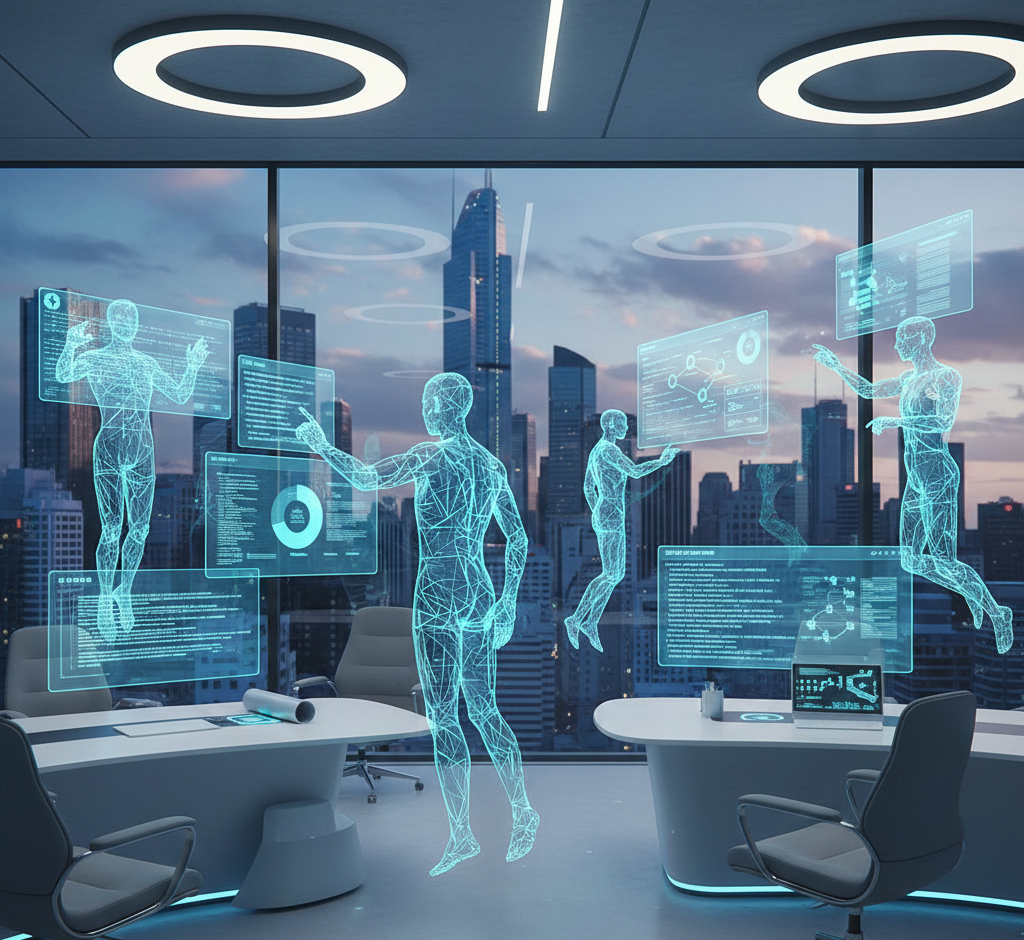
In the past few years, AI Agents have become one of the fastest-growing technologies in the United States. From small businesses to Fortune 500 companies, everyone is using AI-powered automation to reduce manual tasks, cut costs, and improve efficiency. But what’s driving this massive shift? And how exactly are AI Agents transforming daily work in America?
Let’s break it down in a simple, engaging way.
What Are AI Agents?
AI Agents are intelligent digital workers that can think, analyze, and take action on their own. Unlike traditional automation, they don’t just follow fixed rules — they learn, improve, and complete tasks independently.
These agents can:
- Manage emails
- Generate reports
- Assist customers
- Analyze data
- Execute repetitive tasks
- Even make decisions based on patterns
This is why AI Agent adoption in the USA is skyrocketing — companies finally have a tool that works like a smart digital assistant, not just a basic software script.
Why the USA Is Rapidly Adopting AI Agents
There are a few powerful reasons behind the US market’s fast shift:
1. High Labor Costs
Hiring human workers is expensive in the USA. AI Agents help companies reduce operational costs while boosting output.
2. Staff Shortages in Many Sectors
Industries such as healthcare, customer service, logistics, and retail face severe labor shortages. AI Agents help fill these gaps.
3. Demand for Speed & Accuracy
American businesses want fast results without errors — something AI Agents excel at.
How AI Agents Are Replacing Manual Work in the USA
1️⃣ Email & Communication Management
In offices across the US, AI Agents now:
- Read emails
- Sort them
- Draft replies
- Schedule meetings
What used to take hours now takes minutes. Employees can finally focus on more strategic work instead of drowning in their inbox.
2️⃣ Customer Support Automation
American companies like airlines, banks, and e-commerce platforms use AI Agents to handle:
- Customer queries
- Complaints
- Refund requests
- Account updates
These agents give 24/7 instant support, reducing the need for large customer service teams.
3️⃣ Data Entry & Administrative Tasks
One of the biggest areas where AI Agent technology shines is in admin work:
- Filling forms
- Updating spreadsheets
- Processing invoices
- Organizing documents
- Creating summaries
Tasks that once required 5–10 employees can now be completed by a handful of AI-driven systems.
4️⃣ Sales & Marketing Automation
American marketers now rely on AI Agents to:
- Generate leads
- Segment customers
- Create marketing content
- Personalize campaigns
- Analyze performance
This boosts sales while reducing the manual effort previously needed to manage large marketing workflows.
5️⃣ Research & Report Generation
Businesses used to spend days collecting data and preparing reports. Now AI Agents:
- Gather data from multiple sources
- Analyze trends
- Create charts
- Write reports automatically
This is especially popular in finance, real estate, and tech companies in the USA.
Benefits of AI Agents for American Businesses
✔ Higher Productivity
Teams achieve more in less time, thanks to automated workflows.
✔ Lower Costs
Companies save money on labor-intensive tasks.
✔ Better Decision-making
AI Agents process huge amounts of data faster than humans.
✔ 24/7 Work Capability
AI doesn’t sleep — it operates around the clock.
✔ Improved Accuracy
Fewer human errors, better-quality results.
The Future of AI Agents in the USA
The rise of AI is just beginning. Over the next five years, experts predict that 40–50% of repetitive office work in the USA will be handled by AI Agents. This means Americans will shift from boring manual tasks to more creative, strategic roles.
AI isn’t taking jobs — it’s taking tasks. And that’s a big difference.
Conclusion
AI Agents are not just a trend. They are becoming the backbone of modern American workplaces. By reducing manual work, improving speed, and enhancing decision-making, they’re reshaping how businesses operate in 2025 and beyond.
If the USA continues adopting this technology at the same pace, AI Agents may soon become as common as computers in the workplace.